

Introduction: The New Frontier of Branding
Brand identity is no longer just about visuals. In the last century, companies mastered visual design, logos, colors, and typography, to evoke feelings and convey brand values. Today, voice is emerging as the next frontier for branding. Just as specific colors can make customers feel excitement or trust, the qualities of a voice can shape how a brand is perceived. Research shows that sound-driven campaigns (including voice) achieve recall rates as high as 96%, outperforming visual-only ads. In an age of voice assistants, podcasts, and smart devices, a brand’s voice has become its audible logo, a consistent persona that speaks to users across various touchpoints.
We instinctively judge a speaker’s personality and emotion from their voice. Studies in human–computer interaction confirm that people even assign traits like honesty, warmth, or intelligence to synthetic voices, much as we do with human speakers. The human voice triggers immediate emotional responses , making it a powerful tool for branding. A calm, deep voice might convey authority and sophistication, while a lively, upbeat voice sounds friendly and approachable. UX designers and brand managers are beginning to ask: How should our brand sound to reinforce our message and values? This thought leadership piece introduces the concept of VoiceBrandTM, a framework for deliberately shaping voice attributes to transmit brand messages, and outlines the key components of voice that influence customer perceptions.
Why Voice Matters for Brand Experience
Voice is becoming as critical to brand identity as visuals. Users naturally anthropomorphize voice interfaces, judging a company’s “personality” by the voice that represents it. A consistent voice persona, across ads, virtual assistants, or customer service lines, builds recognition and trust.
Humans rely on vocal cues to evaluate others “on a multitude of levels, from honesty and trustworthiness to overall intelligence”. In branding, this means that the voice greeting your customers can significantly impact their trust and comfort with your company. An enthusiastic, conversational tone can make a brand feel friendly and accessible, whereas a flat or robotic voice might create distance. Nielsen Norman Group’s user research has shown that even in written content, tone of voice alters perceptions of a brand’s friendliness, trustworthiness, and desirability, and these effects are amplified when a real voice is speaking. The voice becomes the “human touch” that customers interact with, especially in voice-user interfaces or audio advertising.
Moreover, voice branding enables an emotional connection that visuals alone often cannot achieve. A voice can convey subtleties, a smile, empathy, excitement, sincerity, through tone and inflection. As one voice branding expert notes, “The human voice is a powerful tool for conveying emotion… the right voice can make the audience feel the brand’s story in a visceral way”. In audio brand anthems and commercials, the narrator’s voice often embodies the brand’s personality. Is your brand caring and reassuring? Perhaps a warm, gentle voice will convey that. Is it bold and adventurous? Then maybe a confident voice with dynamic energy fits. The tonality, rhythm, and style of a voice-over can communicate brand attributes (authoritative, friendly, fun, etc.) in a way that text or visuals alone cannot. In short, voice creates a persona for your brand, one that listeners subconsciously evaluate within seconds of hearing.
Components of a VoiceBrandTM Framework
To start shaping a VoiceBrandTM, we need to break down the components of voice that influence listener perceptions. Just as visual branding has elements like color, shape, and font, voice branding has its own key elements. Below is a framework of components to consider when designing a brand’s voice persona:
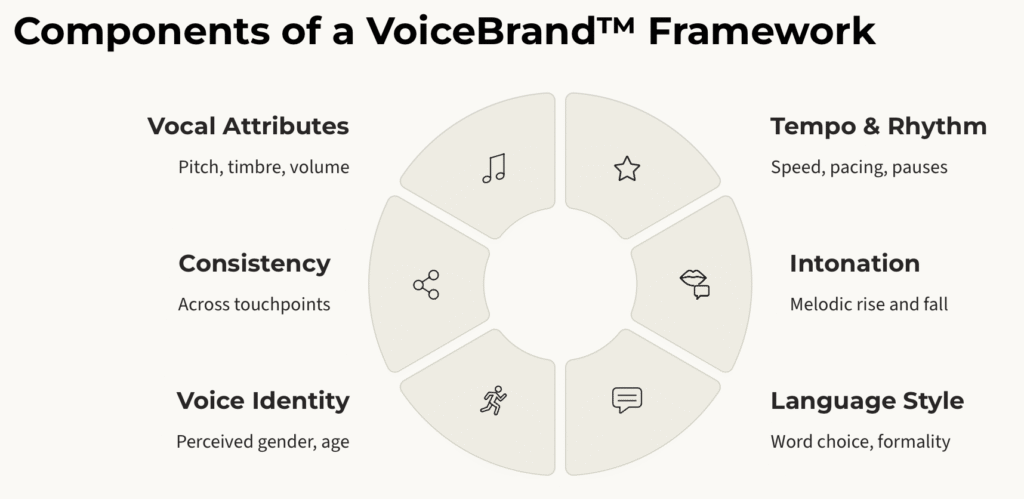
- Vocal Attributes (Pitch, Timbre, and Volume): These are the innate qualities of the voice sound. Pitch refers to how high or low the voice is – a higher-pitched voice may sound youthful or enthusiastic, while a lower pitch can imply authority or calm confidence. (Historically, deep voices have been associated with leadership dominance, though context matters. One study found that lowering pitch increased credibility for male voices more than female voices.) Timbre (voice quality) is the texture of the voice. For example, a voice can be warm and smooth, or raspy and edgy. This affects how approachable or authentic the voice feels. Volume and projection also play a role: a soft-spoken voice might communicate intimacy or gentleness, whereas a strong, projecting voice can sound passionate or commanding. Brands must consider what combinations of pitch and tone align with their identity, e.g. a luxury brand might opt for a lower, velvety voice to convey sophistication, whereas a playful startup might use a brighter, lively voice to signal energy.
- Speech Tempo and Rhythm: The speed at which a voice speaks and its rhythm (including pauses) greatly influence audience emotion and comprehension. A fast-paced voice tends to convey excitement, urgency, or youthful energy; a slower pace feels more deliberate, soothing, or serious. Think of how an excited tech gadget commercial voice rattles off features quickly, versus a calm public service announcement that speaks slowly for gravity. One guide suggests that an “energy drink brand” voice would likely speak a bit faster to express excitement and adventure, whereas a bank’s voice would speak more slowly and measured. Strategic pauses in speech also add meaning. A brief pause can make a statement feel thoughtful or empathetic, while an absence of pauses might sound scripted or impersonal. Consistent rhythm and tempo choices should match your brand’s vibe: are you high-energy and fast-moving, or careful and methodical? Choose a pace that embodies those traits.
- Intonation and Emphasis: Beyond speed, intonation (the melodic rise and fall of speech) and word emphasis shape how messages come across. A voice with varied intonation, rising and falling in pitch, sounds engaging and emotionally expressive; a monotone voice can seem dull or unenthusiastic. Intonation can even change implied meaning. For example, emphasizing different words in a sentence (“Get on the bus” vs. “Get on that bus!”) can suggest authority in the first case and urgency in the second. Emotional tone lives in these nuances: a voice that often has a smile in its tone, with upward inflections and warm emphasis, will convey happiness or optimism (great for a fun, friendly brand). Conversely, a steady, flat intonation might convey seriousness or reliability (useful for a no-nonsense, technical brand). Decide what emotional undertones your brand voice should consistently carry, whether it’s enthusiasm, calm reassurance, humor, or sincerity, and ensure the intonation patterns reflect that. Modern text-to-speech branding even allows customizing emotional tone, like making a synthesized voice sound more sympathetic or excited on demand , underscoring how crucial these elements are to brand impression.
- Language Style and Persona: While VoiceBrandTM focuses on the sound of the voice, the verbal style, the choice of words, phrasing, and level of formality, is an integral part of a voice’s personality. This goes hand-in-hand with the acoustic elements. Brands should define if their voice speaks in a casual, conversational style or a formal, eloquent manner; uses simple everyday language or technical jargon; cracks jokes or stays serious. These choices must align with brand values and audience expectations. For example, a bank’s voice might use polite, professional language, while a youth-oriented brand might use slang or witty quips. Consistency in language choices across spoken content helps reinforce the brand voice. (MailChimp, for instance, is known for a tone that is “casual yet professional,” making complex tech sound simple.) Additionally, consider accent or dialect as part of persona. A regional accent can localize a brand voice (imagine a British-accented voice for a premium or international flair), but it should be chosen carefully to match brand identity and not alienate the core audience. The key is that vocabulary and voice delivery work together to present a unified character. In essence, a brand’s voice persona should be as well-defined as its visual mascot or logo, it has a backstory, a style, and a set of characteristics that feel authentic to the brand’s story.
- Voice Gender and Age: The apparent gender and age of a voice influence listener perceptions and should align with brand strategy. A youthful voice (whether male or female) might impart energy, innovation, or trendiness, appealing to younger audiences. An older-sounding voice could convey wisdom, experience, or traditional values. Many brands historically chose female voices for assistants to sound friendly and helpful, or male voices for authority, but these conventions are evolving. It’s crucial to choose what best fits your brand persona and avoid stereotypes. Some brands even explore gender-neutral voices to emphasize inclusivity. For example, when designing a voice assistant, brands “want to choose the appropriate gender, voice, and tone” based on their values and users’ needs . Whichever voice identity you choose, ensure it resonates with your audience and is perceived as authentic for your brand’s role. User testing can be invaluable here; as SoundHound’s voice UX team points out, extensive testing helps determine if your customers prefer a higher or lower pitch, a softer or firmer delivery, etc., so that the chosen voice truly engages and comforts your users. Consider for instance that older audience tend to understand lower pitched voices than higher pitched ones.
- Consistency and Context: Finally, a VoiceBrandTM must be consistent across all touchpoints while adapting subtly to context. Just as a company has a defined color palette used in all media, the same voice attributes (and often the same voice talent or TTS voice) should carry through from interactive voice response systems to mobile apps to advertisements. Consistency builds recognition. Listeners should be able to say, “That voice sounds like us (the brand).” According to one branding guide, when companies maintain a consistent voice, they build stronger audience connections. However, consistency doesn’t mean rigidity. The voice can flex tone slightly for different scenarios (e.g. a customer service bot might sound a bit more empathetic during support interactions, whereas the same brand’s radio ad voice sounds more upbeat), but these variations should feel like facets of one personality. The core persona, those attributes defined above, remains intact. To manage this, companies are starting to create voice and tone guidelines (akin to visual brand guidelines) that specify how the brand’s voice sounds in various situations, what phrases or tone to use or avoid, and how to maintain coherence. Training voice talent or fine-tuning synthetic voices to these standards ensures the brand voice stays on-brand everywhere. The ultimate goal is to have a distinct, recognizable voice that becomes part of the brand’s identity, as unique as its logo or slogan.
Aligning Voice with Brand Personality
How do you decide what your brand’s voice should sound like? It begins with your brand personality, the human traits you want your brand to embody. In marketing, brands are often described with personality dimensions (sincere, exciting, competent, sophisticated, rugged, etc.) per Jennifer Aaker’s classic framework. Each of these personality types can be translated into voice characteristics. As a voice design expert observed: “A rugged brand is tough and outdoorsy… a rugged voice may be low and gravelly. A sincere brand shows honesty and cheerfulness… a sincere voice sounds honest and upbeat.”. This highlights a direct mapping: voice is a line to identity, instantly giving listeners clues about “who” your brand is .
Consider a few examples of aligning brand traits to voice elements:
- Friendly & Helpful brand: Use a warm, medium-pitched voice with an enthusiastic intonation. Moderate pace (not too fast) with a positive, rising inflection can convey approachability. Example: many customer service hotlines and voice assistants use such voices to sound welcoming and supportive. The Coca-Cola company, known for happiness and togetherness, has often used voices that are friendly, upbeat, and universally relatable to match that brand spirit .
- Innovative & Young brand: Use a lively tempo and slightly higher pitch, projecting excitement. A casual tone with informal language can make it relatable to a younger demographic. For instance, tech startups might choose a youthful-sounding narrator in promo videos to emphasize modernity and energy. (MailChimp’s voice, as noted earlier, strikes a balance by being casual and friendly yet still professional, making a tech product feel simple and approachable.)
- Luxury & Sophisticated brand: Opt for a lower-pitched, calm voice, possibly with a distinct accent (e.g. British English for an international luxury feel). The speech should be unhurried and articulate, exuding confidence and quality. This could be seen in high-end automobile commercials or premium hotel narrations, where the voice almost smiles with refined assurance.
- Bold & Adventurous brand: Choose a voice with a strong, dynamic range, perhaps a bit gravelly or intense in timbre, and an expressive modulation. A faster pace and emphatic tone convey excitement and bravery. Outdoor and sports brands often use such voices to pump up the energy and inspire action in their audience.
By clearly defining your brand’s personality traits (e.g. playful, trustworthy, authoritative, compassionate), you can then craft a voice profile that matches each trait with vocal techniques. If your brand were a person, how would that person sound and speak? Many companies find it useful to create a persona document for their voice: specifying age, accent, 3-5 key adjectives for its style, sample phrases, and even references to known voices or characters that fit the mold. This serves as a guiding star for any voice talent or audio producer working on the brand.
Building a VoiceBrandTM Strategy
Establishing a VoiceBrandTM is not a one-off task but an ongoing strategic endeavour. Here’s a structured approach for brand managers and UX designers to develop and implement a voice branding strategy:
- Identify Your Core Values and Audience: Start by grounding the voice in what your brand stands for and who it speaks to. A compassionate healthcare brand serving seniors will need a very different voice than an edgy fashion brand targeting Gen Z. Make sure you understand your users’ preferences and cultural context. (Different audiences have different expectations: for example, what sounds “trustworthy” or engaging can vary across cultures and age groups.) Your voice should ultimately resonate with and not alienate your target customers.
- Define Voice Characteristics from Brand Personality: Using the brand personality traits identified, decide on the specific voice characteristics as discussed (pitch range, tone, speed, etc.). Write these down in a voice profile. For instance, you might note: “Our brand voice is female, 30s, with a friendly British accent; tone is warm, confident, and witty; pace is medium with an upbeat energy; avoids jargon; always empathetic in user-facing contexts.” Being detailed here helps avoid ambiguity when multiple people create voice content.
- Develop Voice Guidelines: Much like a style guide for writing or visuals, create documentation for voice usage. Include examples of do’s and don’ts. For example, if the brand voice is casual, the guide might say: do use contractions and an inviting tone (“Hey, welcome back!”), don’t use stiff formal lines (“Greetings valued customer”). Specify how the voice should handle various scenarios: greeting, apologizing for errors, delivering exciting news, etc. Include guidance on emotional tone: e.g., in emergencies, speak calmly and lower pitch; when encouraging, sound bright and uplifting. These guidelines will ensure consistency whether the voice is delivered by a live spokesperson, a voice actor in an ad, or a synthesized voice in an app.
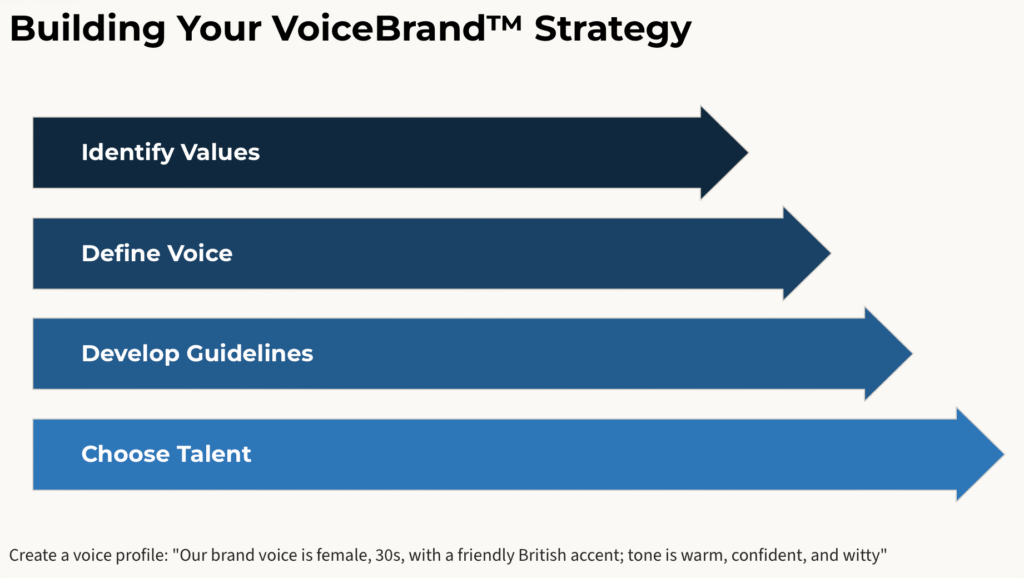
- Choose the Right Voice Talent or Technology: With a clear profile, you can cast voice actors or select text-to-speech voices that match. This might involve auditions for voice actors to find the one who naturally embodies the brand voice. Alternatively, some brands are now creating custom AI voices to have a unique synthetic voice they own (so it doesn’t get used by others). The decision here should consider longevity and scalability. A signature voice that becomes closely tied to your brand (think of the voice of Apple’s Siri or the famous “Moviefone” voice) can be an asset, but you’ll need a plan for continuity if using a human voice (e.g., backup voices or voice cloning of the same tone if the original isn’t available). Ensure the chosen voice can convey the needed range of emotion; a voice that is too flat or too theatrical might not work across all your content.
- Testing and Iteration: Before fully rolling out, test the voice with real users or focus groups. Do customers find the voice trustworthy and likable? Does it convey the intended brand attributes (e.g. “Does this voice sound as friendly and expert as we want?”)? Gathering feedback is crucial, as sometimes slight adjustments are needed. Maybe the speed should be a bit slower for clarity, or the chosen accent might be causing confusion. Keep in mind the earlier insight from research: multiple acoustic factors together shape perception, and context influences what works best. So test the voice in realistic contexts (e.g. an interactive dialog, or a sample ad) to see if it’s hitting the mark. Iteratively refine the script phrasing, intonation, or even switch voice talent if needed.
- Implementation Across Channels: Deploy the voice consistently. For interactive voice interfaces (IVRs, smart speakers, voice assistants), design scripts and dialogs in the established tone, including implementing small talk and empathy where appropriate to make the interaction feel human. For marketing content like videos or radio, direct the voice actor to adhere to the style guidelines. Ensure that even automated messages (voicemails, on-hold messages) use the same voice persona. This uniformity reinforces brand recognition. One caution: adjust the content to the medium while keeping voice personality. For example, a voice assistant might handle jokes differently than a YouTube ad, but both can still sound like the same character. The voice guidelines should clarify such nuances.
- Monitor and Evolve: After implementing, monitor how the voice branding is performing. Are customers responding positively? Metrics like customer satisfaction in voice interactions, recall of audio ads, or even direct feedback (comments about the voice) can indicate success or areas to tweak. As trends and audience preferences shift, revisit your VoiceBrandTM strategy. Periodic reviews will keep the voice current, for instance, a slangy tone that worked five years ago might need updating as language evolves. The core persona can remain, but flexibility to refresh is part of keeping the brand voice genuine. Also, as technology advances (say, new synthesis that can convey emotions better), consider leveraging those to enhance your VoiceBrandTM while staying true to its identity.
The Future: Voice as an Integral Brand Asset
We are heading into an era often dubbed the “Internet of Voice”, where interacting with brands via voice will be routine. Voice is the new UI. From asking your car for the nearest coffee shop (and hearing a branded voice respond) to smart appliances that speak in a brand’s tone, voice is becoming ubiquitous. Forward-looking brands are already treating voice as a core element of their identity. In the future, we can expect:
- Custom Sonic Identities: Brands will invest in unique sonic logos and audio logos that include voice or vocal elements (think of McDonald’s “I’m lovin’ it” sung phrase or a distinctive voice saying a tagline). These will be as recognizable as visual logos, providing an auditory shorthand for the brand.
- Branded Voice Assistants: Instead of generic assistants like Alexa or Siri answering on behalf of a company, brands may deploy their own voice AIs with distinct personalities. A retail brand might have a cheery virtual shopping assistant voice, whereas a banking brand’s assistant might sound composed and wise. These voices will carry brand values into interactive experiences. Companies like Amazon, Google, and others already allow some customization of assistant voices, but we’ll see more hyper-personalized, AI-generated voices that brands fully control for consistency across all platforms.
- Emotionally Adaptive Voices: As technology enables real-time emotion detection and voice modulation, brand voices might adjust to customers’ moods to improve customer experience . For example, a voice assistant might speak in a softer, more soothing tone if it detects a user is upset, aligning with a brand’s commitment to empathy. Brands that effectively use these features can strengthen emotional bonds, but they must also ensure the adaptations remain on-brand and don’t feel disjointed.
- Voice Guidelines as Standard Practice: Just as brand books today cover visual and textual guidelines, tomorrow’s brand manuals will likely include extensive voice and audio guidelines. It will become standard for branding agencies to deliver a “voice style guide” alongside the fonts and color codes. This guide might include the brand’s preferred voice descriptors (e.g. “bold and friendly, like a helpful coach”), sample voice scripts, and instructions for voice talent or AI voice designers.
- Cross-Cultural Voice Branding: Brands with global presence will face the challenge of localizing voices without losing the core persona. We may see brands creating different voice versions for different languages or regions, each culturally tuned but still unmistakably “the same character.” (For instance, the same cheerful female persona could be embodied by an American English voice in the US, a Spanish voice in Mexico, and an Arabic voice in Egypt, each crafted to preserve the brand’s personality in a locally authentic way.) Managing these multiple voices as one identity will be a new aspect of global brand management.
Voice branding is poised to evolve much like visual branding did, from early experimentation to a refined discipline with its own best practices and innovations. It’s a visionary field where creatives, psychologists, and technologists intersect. Brand managers and UX designers who embrace VoiceBrandTM now will be ahead of the curve. They’ll be the ones ensuring that when their brand “speaks,” it truly speaks for the brand, delivering messages in a voice that audiences not only recognize, but also trust and love.
Conclusion
VoiceBrandTM is about crafting how your brand sounds, intentionally shaping voice attributes to tell your brand’s story in audio form. It requires understanding human reactions to pitch, tone, pace, and other vocal elements, then aligning those with brand values to build a coherent voice persona. Done well, a VoiceBrandTM can become a powerful asset: fostering emotional connection, enhancing user experience in voice interfaces, and differentiating your brand in a crowded market. As one article put it, once a compelling voice-over “breathes life” into a brand’s narrative, that voice can become synonymous with the brand itself , echoing in customers’ minds long after the interaction.
For UX designers and brand strategists, the takeaway is clear: it’s time to give voice a seat at the branding table. Start thinking of voice not as an afterthought or mere functional element, but as a strategic brand expression, as critical as a brand’s visual logo or tagline. By developing a robust VoiceBrandTM framework now, you set the stage for future interfaces and experiences where your brand can literally speak to customers in a consistent, meaningful way. In a world increasingly filled with talking devices and multimedia content, finding your distinct voice, and maintaining it, will be key to being heard, remembered, and loved by your audience.
Sources: The insights and examples in this article draw from recent research and expert perspectives on voice and branding, including user experience studies on tone’s impact , academic findings on vocal trust cues , voice UX design guides , and industry case examples of audio branding . These connected sources (linked inline) offer further reading for those who wish to explore the emerging field of voice branding in depth.